
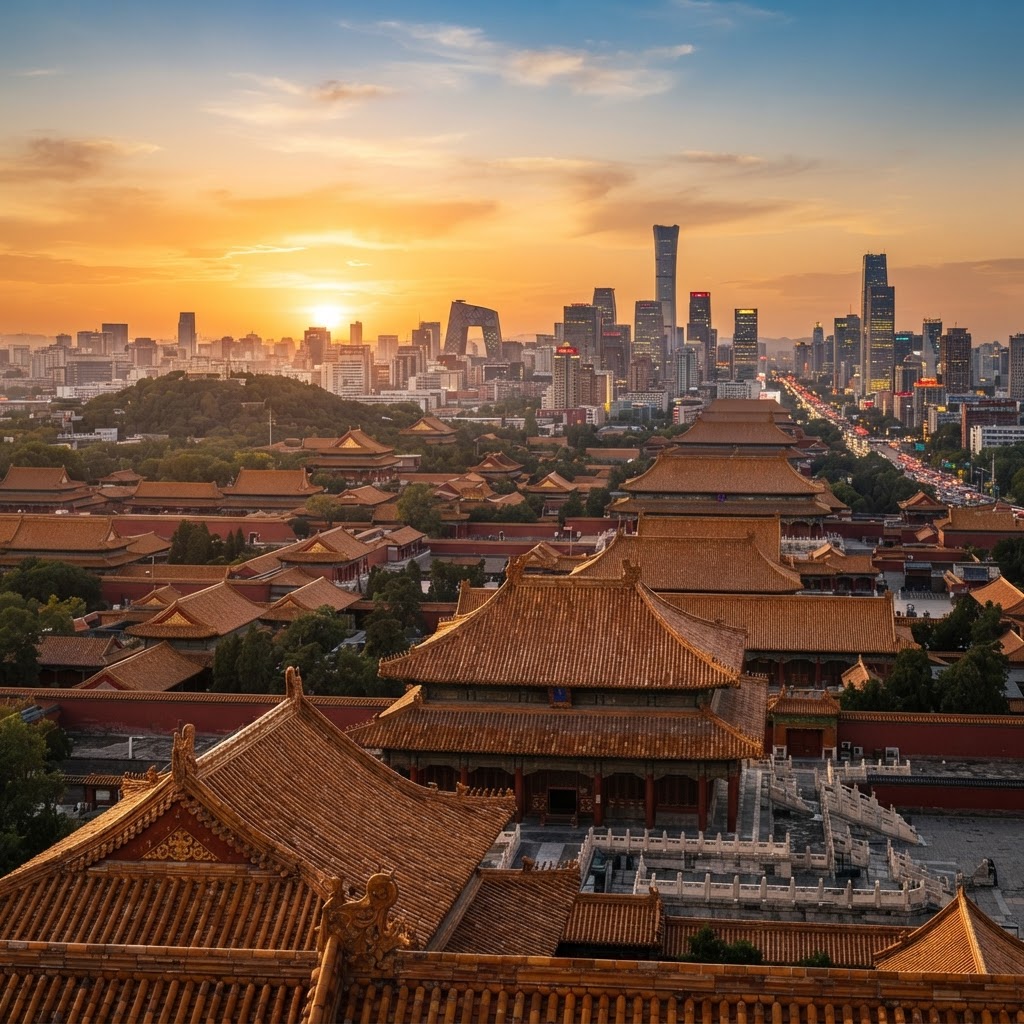
Beijing
Beijing is China's political and academic heart, home to the most prestigious universities in the country including Tsinghua, Peking University and Renmin. The Haidian district in the northwest holds the densest concentration of C9 League institutions and a deep Mandarin-immersion environment. The city blends ancient grandeur — the Forbidden City, the Great Wall and the hutong neighbourhoods — with a thriving tech and research ecosystem in Zhongguancun. Living costs run USD 650-850 a month, and career access to government, AI labs and state-owned enterprises is unmatched.
Why students choose Beijing
Deep Mandarin immersion, historic hutong neighbourhoods and a thriving campus culture.
Career & jobs: Government, tech giants, AI research labs and state-owned enterprises offer internships.
What you need to know about Beijing
$700/mo
Government, tech giants, AI research labs and state-owned enterprises offer internships.
Very safe, with strong public security and a well-policed central core.
Vast subway system and high-speed rail hub connect the capital to all of China.
Peking duck, hand-pulled noodles and northern dumplings dominate the local table.
Forbidden City, Great Wall, Temple of Heaven, Summer Palace
Universities in Beijing
Beijing Language and Culture University
Renmin University of China
Beihang University
Beijing Normal University
Tsinghua University
Peking University
Fund your studies in Beijing
These scholarships apply to students heading to Beijing. Check eligibility and apply early.
Sichuan Government Scholarship
Partial tuition at Sichuan universities
PartialUniversityPeking University International Scholarship
Full or partial tuition for outstanding international students
PartialProvincialGuangdong Government Scholarship for International Students
Tuition support at Guangdong universities plus a stipend
PartialProvincialJiangsu Provincial Government Scholarship
Partial tuition support at Jiangsu universities
PartialStudent visa for Beijing
- X1 visa — long-term (degree programs, valid for the full study period)
- X2 visa — short-term (language and exchange programs up to 180 days)
- JW202 form from your university + admission notice required
- Convert to a residence permit within 30 days of arrival at the local Beijing Entry-Exit Bureau
How to apply in Beijing
- 1. Choose a university and program in Beijing
- 2. Prepare documents (passport, transcripts, recommendation letters, study plan)
- 3. Submit the application and pay any application fee
- 4. Receive admission notice and JW202 form
- 5. Apply for your student visa at the Chinese embassy
- 6. Travel to Beijing and register at your university
Applications for September intake usually close in June; spring intake closes in December.: Applications for September intake usually close in June; spring intake closes in December.
Most universities require a high school diploma (Bachelor), a relevant Bachelor (Master), language proficiency (HSK or IELTS), and a valid passport: Most universities require a high school diploma (Bachelor), a relevant Bachelor (Master), language proficiency (HSK or IELTS), and a valid passport.
Partner with us in Beijing
Universities and agencies in Beijing can partner with StudyInChina to recruit international students.